Why sealing matters here
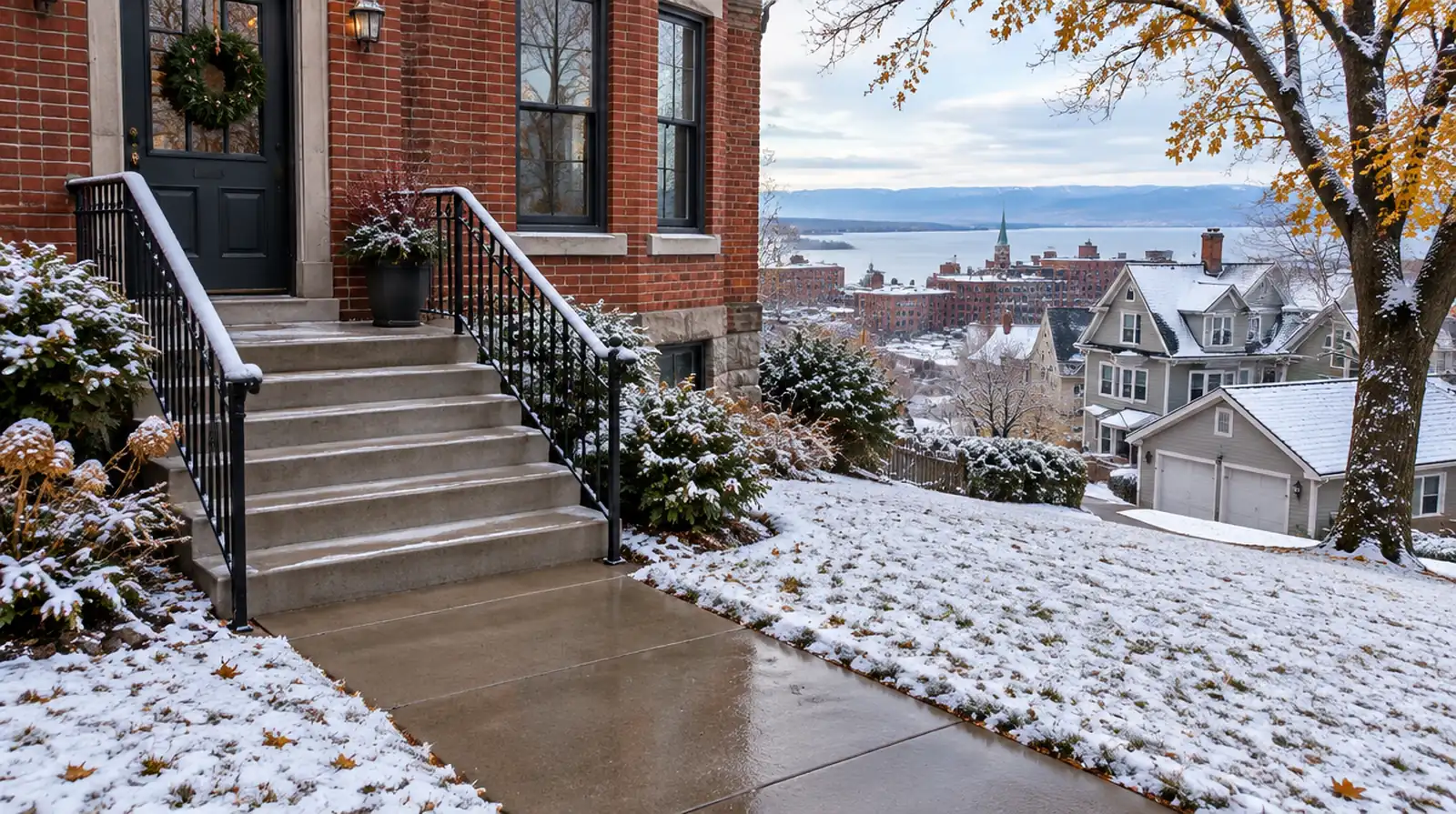
Exterior concrete in a northern climate goes through dozens of freeze-thaw cycles every winter. Water soaks into the surface, freezes, expands and slowly pops off small pieces of concrete, a process called scaling. Deicing salts make it worse by drawing in more water and increasing pressure in the pores. Steps, walkways, garage aprons and patios often show pitting and flaking within a few years. A quality penetrating sealer reduces water and salt absorption and can significantly extend the life of your concrete.
Penetrating sealers
Silane and siloxane sealers soak into the concrete and create a water-repellent barrier inside the pores without changing the surface look or texture. They let the slab breathe and do not make it slippery, which is important on steps and walks in icy weather. They are our main recommendation for exterior flatwork.
Topical sealers
Acrylic sealers form a film that enhances color and adds sheen. They suit stamped or colored patios but wear faster and can be slick when wet or icy, so we add grip and use them selectively.
Cleaning and prep
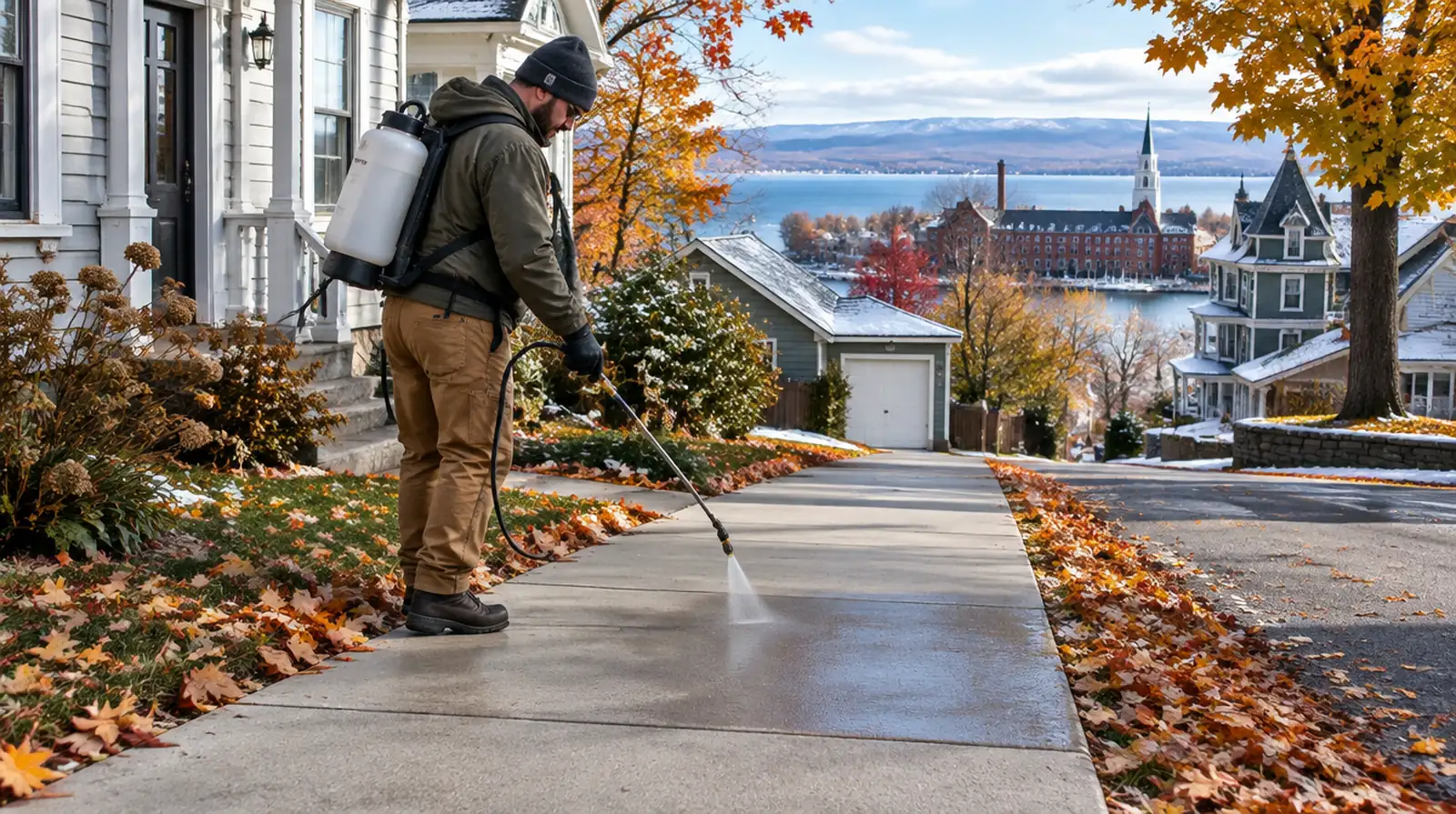
We pressure wash, remove salt residue, treat organic stains from leaves and let the concrete dry fully before sealing. Sealing over dirty or damp concrete traps problems and shortens the sealer's life.
What we seal
- Front steps and stoops.
- Walkways and sidewalks.
- Garage aprons and driveways.
- Patios and pool surrounds.
- Stamped and decorative concrete.
- Commercial entries, ramps and plazas.
Cracks and joints
We fill cracks and joints with flexible sealant to keep water from getting under slabs, where it can freeze and heave them. That step pairs naturally with sealing the surface.
Timing
Sealing needs dry concrete and temperatures above the product's minimum, so we schedule from late spring through early fall. The best time is before winter, so your concrete goes into the salt season protected.
New concrete
If you poured new steps or a walk this year, sealing before its first winter is one of the best things you can do for it. We wait until the concrete has cured enough, typically about a month.
How often to reseal
Penetrating sealers usually last several years. Topical sealers need refreshing every two to three years. We can remind you when it is time.
Deicer choices
Not all deicers are equally harsh. Rock salt is hard on concrete and plants. Magnesium chloride and calcium chloride work at lower temperatures but can still damage concrete over time, especially new concrete. Sand provides traction without chemical damage. Even sealed concrete benefits from using deicers sparingly and clearing slush before it refreezes.
Rental and commercial properties
Landlords, condo associations and businesses are responsible for safe steps and walkways. Sealing reduces scaling and the trip hazards it can create, and it keeps entries looking cared for. We can handle multiple buildings on a single schedule and provide a simple maintenance plan for future resealing.
What sealing cannot fix
Sealers protect sound concrete; they do not repair badly scaled or broken surfaces. Those areas need resurfacing or replacement first, and we will tell you honestly when that is the case.
Choosing between options
For most exterior steps, walks and aprons, a penetrating sealer is the safest choice because it protects without changing traction. For colored or stamped patios where appearance matters most, a topical sealer with grip additive can make sense. We walk through each surface with you and recommend the right product for each one, rather than one product for everything. That keeps cost reasonable and the results consistent.
Seal before winter
Call (000) 000-0000 for a free estimate.