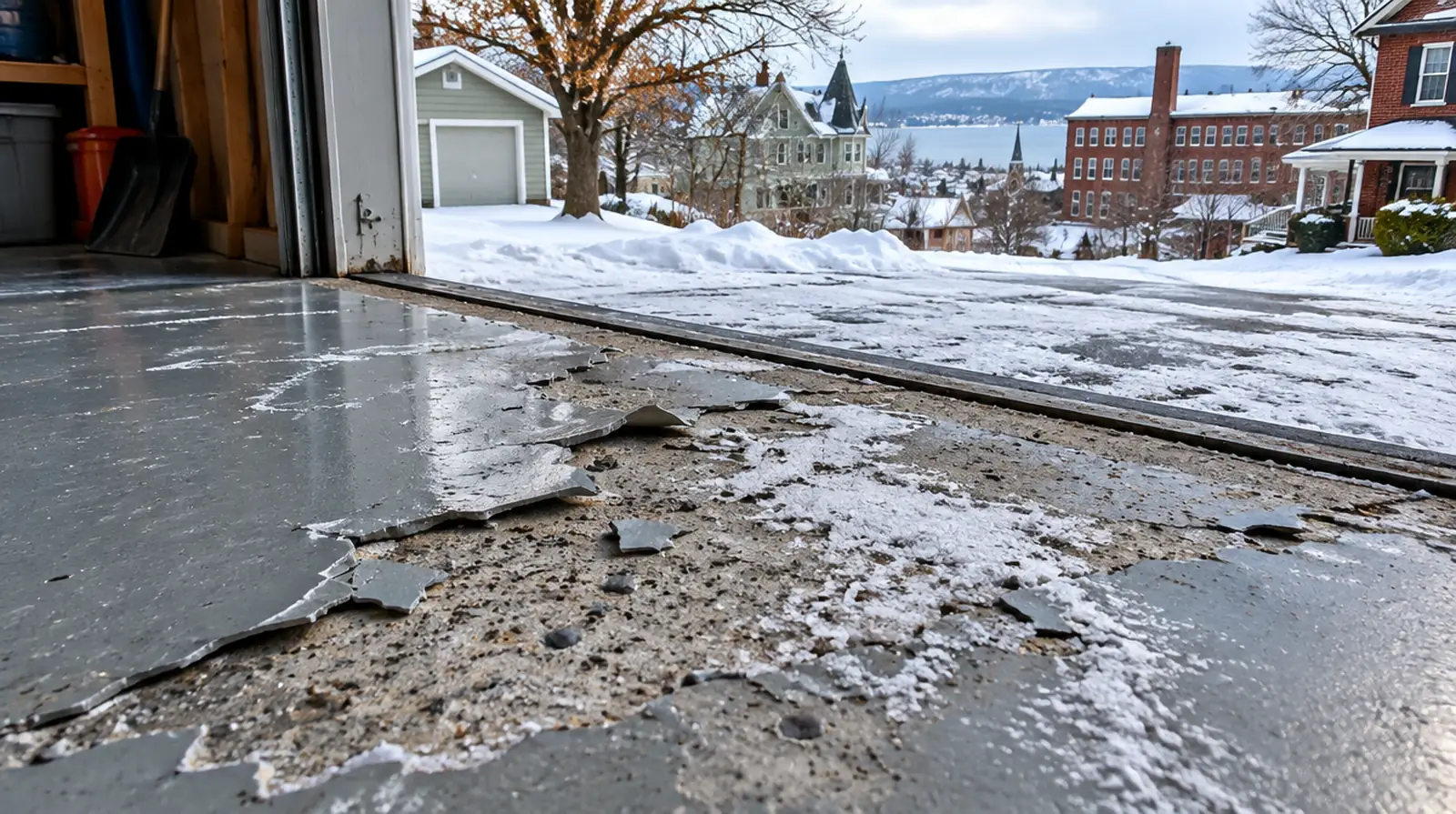
Common causes of failure
Most coating failures trace back to the slab and the prep, not the material. Acid etching instead of grinding leaves a weak surface. Moisture vapor rising through slabs with no vapor barrier pushes coatings off from below. Salt water seeps through pinholes and spreads under thin films. Hot tires lift soft products. Coatings applied in cold garages may never cure properly. Before we suggest a repair, we determine which of these caused your problem.
Signs of trouble
- Peeling where tires rest or at the door edge.
- Blisters, bubbles or white powder under the coating.
- Pitting and flaking concrete showing through.
- Chips from shovels, tools or jack stands.
- Cracks running through the coating.
- Yellowed or chalky areas.
Spot repair or full replacement
If the coating is bonded well across most of the floor, we can grind out damaged areas, rebuild the layers and blend the finish. Flake floors hide repairs well. If the coating is loose in several areas, patching will not last. In that case, we remove it completely and start over with proper prep.
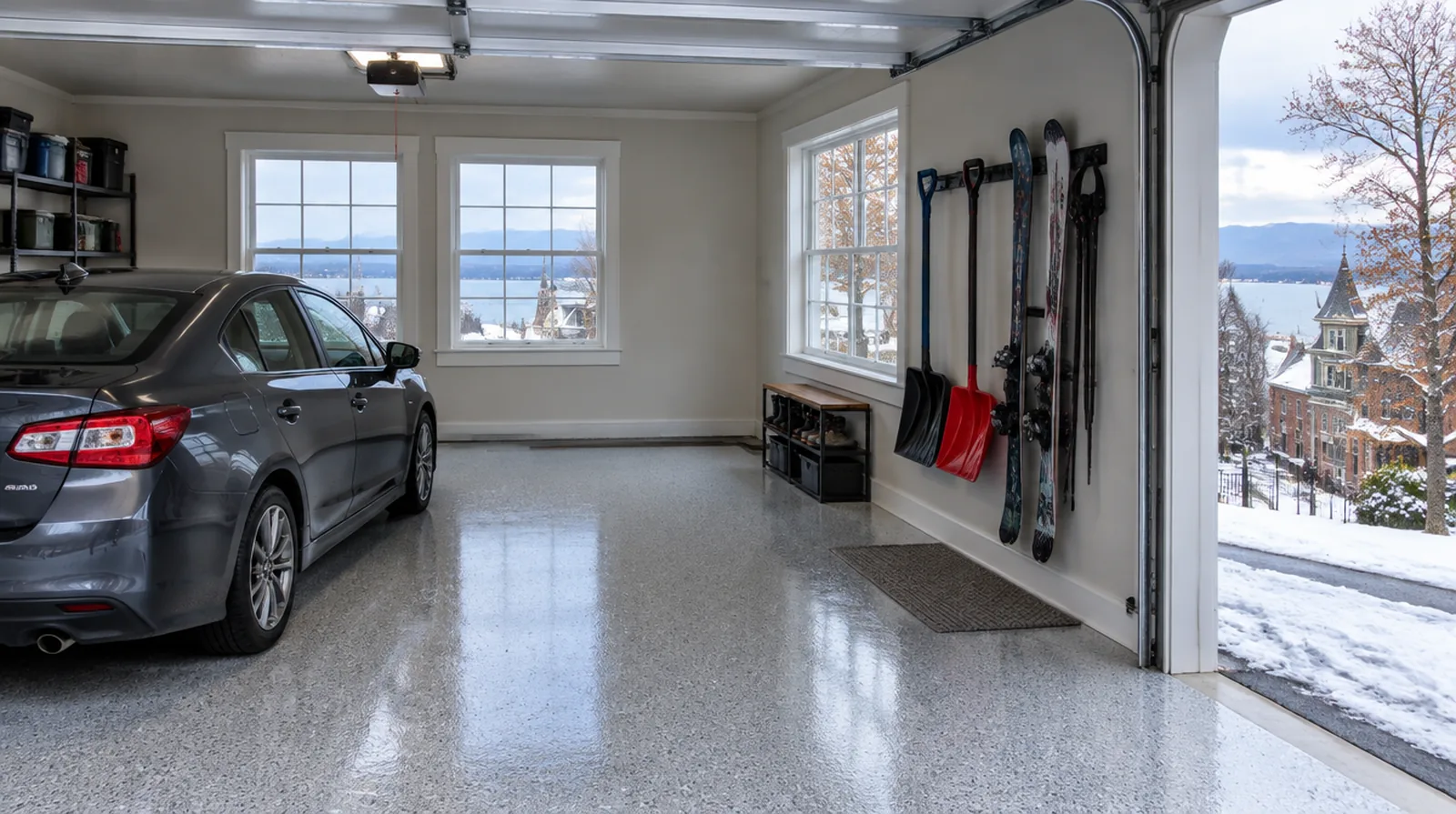
Removing failed coatings
We strip old coatings with diamond and carbide tooling, collecting dust as we go. Then we inspect the bare slab, test moisture and repair salt damage, cracks and spalls before installing a new system.
Salt-damaged concrete
Years of road salt can leave the top of a slab soft, flaky and pitted. We grind until we reach sound concrete, then rebuild low areas with repair mortar or a resurfacer before coating. This restores a smooth, solid surface.
Moisture in older basements
Many basements and older garages were built without vapor barriers. Moisture rising through the slab is a common cause of blistering. We measure it and, when needed, apply a moisture-mitigating primer before the new system.
Commercial repairs
In kitchens, breweries and shops, coatings wear at drains, doorways and under heavy traffic. We repair those areas, rebuild coves and recoat surfaces, working around business hours.
What happens at the visit
We look at the failure pattern, test adhesion and moisture and take photos. You receive an explanation and a written estimate for the options that make sense, from spot repair to full replacement.
Preventing repeat problems
A new floor built on ground, tested concrete with the right primer is the best defense. After that, squeegee meltwater, rinse salt regularly and use pads under jack stands.
Repairing other contractors' work
We often repair floors installed by others or by homeowners using kits. There is no judgment here; kits are often applied with the best intentions but without grinding equipment or moisture testing. We explain what went wrong and how to avoid it next time, and our quote covers what is needed to make the new floor last.
Cracks in coated floors
Cracks that move with the seasons can telegraph through a coating. We route and fill them with flexible or rigid materials depending on movement, then blend the repair into the floor. In flake systems, these repairs are often almost invisible once finished.
Cost of waiting
A peeling floor lets salt water into the concrete underneath. The longer it stays that way, the more damage builds up and the more grinding and patching the repair needs. Addressing problems before another winter usually saves money.
Warranty and follow-up
We stand behind repairs built on proper prep and tell you plainly where limits exist, such as moisture we cannot fully control. After the work, we check in so any issue is caught early instead of after another salt season.
Have your floor inspected
Call (000) 000-0000 for a free estimate.