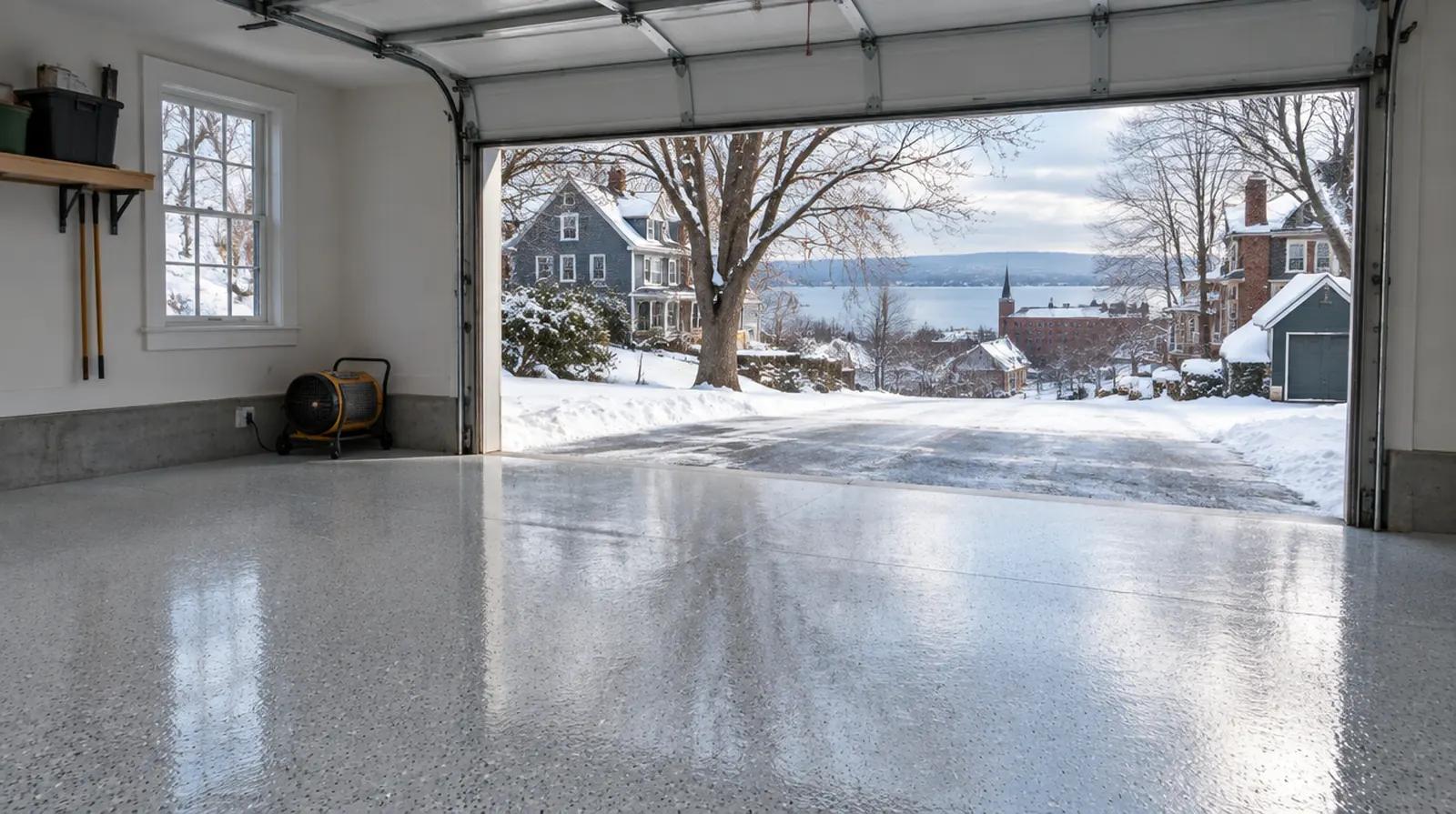
What sets polyaspartic apart
Polyaspartic is a polyurea-based coating that cures much faster than epoxy and continues curing at temperatures that would stall most epoxies. It is UV stable, so it will not yellow, and it remains slightly flexible, which helps it handle the expansion and contraction of a slab in an unheated garage. We use it as a base coat, a topcoat or both, depending on the slab and the system.
Why it fits our winters
Unheated garages can sit near or below freezing for months. Traditional epoxy needs warmer slabs to cure properly, which once meant waiting until late spring. Polyaspartic products formulated for cold application let us install good floors through much of the year. With temporary heat when necessary, we can keep projects moving even in the colder months.
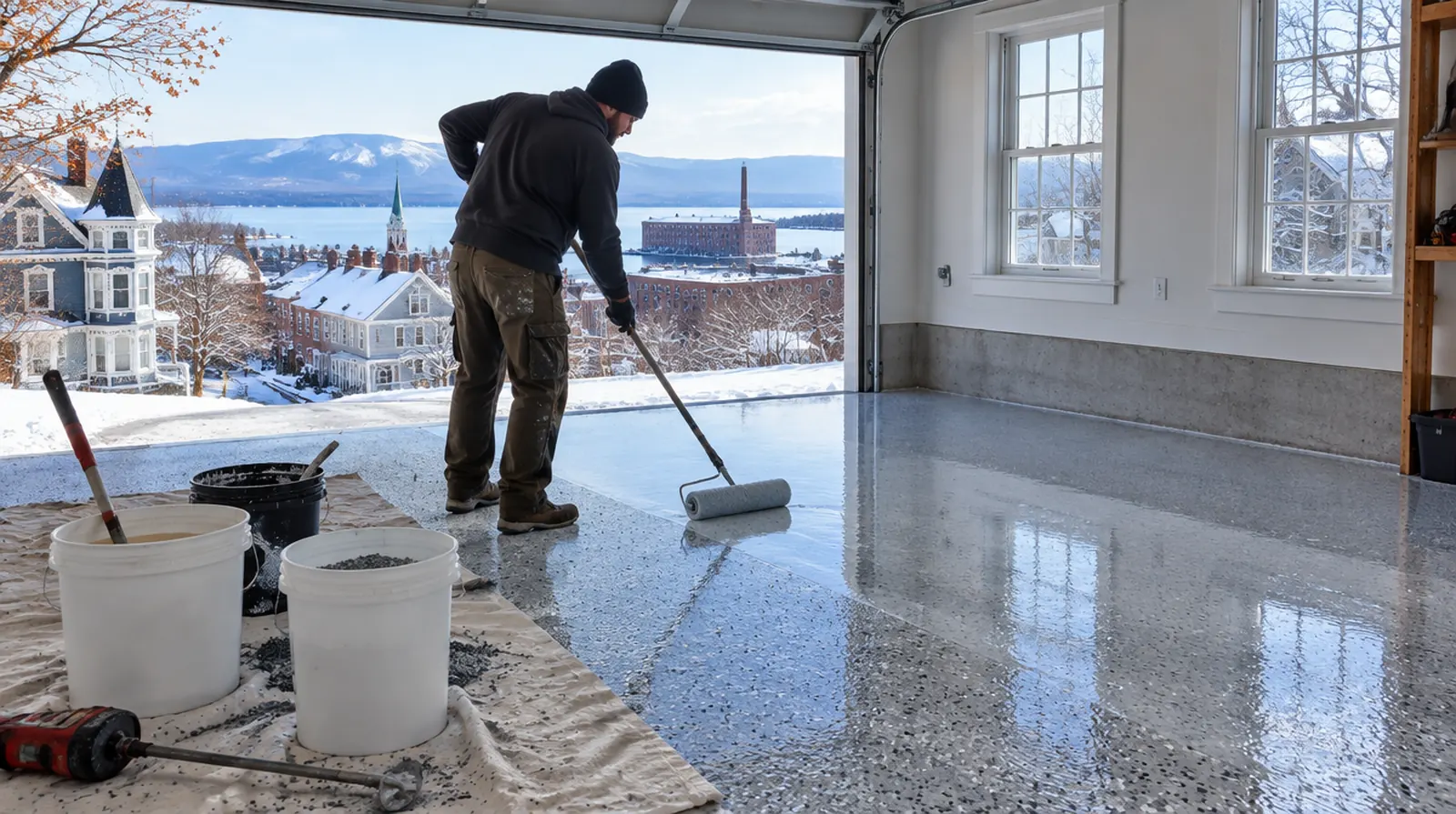
One-day installations
On many garages we can grind, repair, coat, broadcast flake and topcoat in a single day. You can walk on it the next day and usually park within a day or two. For families who need the garage to keep snow off the car, that short downtime is a major benefit.
Salt and chemical resistance
A cured polyaspartic topcoat resists road salt, magnesium chloride, oil, antifreeze and gasoline. Meltwater beads on the surface instead of soaking in, so salt residue rinses off rather than damaging the concrete below. This is one of the main reasons we specify it for garages that see heavy winter driving.
UV stability
Floors near large garage doors, sunrooms and glassed-in porches get strong sun, especially when it reflects off snow. Epoxy can amber in those spots. Polyaspartic keeps its color, so a light floor stays light from front to back.
Skill required
The fast cure that makes polyaspartic convenient also makes it demanding to apply. Material can begin to set within minutes, so crews work in small batches with a planned sequence. This is why it is generally not sold in consumer kits and why experience matters.
Pairing with other products
On damp basement slabs, we often start with a moisture-mitigating epoxy primer, then build with polyaspartic. For metallic floors, epoxy remains the better choice because it gives more working time for the pattern. During your estimate, we explain the combination that fits your floor.
Finish options
Polyaspartic works with flake, quartz and solid-color systems in gloss or satin. We add grit for traction in garages and entries, which matters when snow melts off tires and boots.
Odor and ventilation
Some formulas have a noticeable smell while curing. In attached garages we use lower-odor products when possible, ventilate the space and seal off doors into the home. The odor fades quickly once the coating hardens.
Care
Push meltwater out with a squeegee, rinse salt every few weeks in winter and mop with a neutral cleaner. No waxing or resealing is needed for many years.
Cost compared with epoxy
Polyaspartic materials cost more per gallon than standard epoxy, and installation requires a skilled crew. In exchange, you get faster return to service, better UV stability and the ability to install in colder weather. For many garage owners who do not want to wait for summer or lose their garage for days, the trade-off is worthwhile. We give you a written quote that compares both options so you can decide.
Questions to ask any installer
Ask whether the slab will be diamond ground, how moisture will be tested, what the minimum application temperature is for the product and how many coats will be applied. Ask how long before you can drive on it. Clear answers to these questions are a good sign that the crew understands fast-cure materials and northern conditions.
Schedule a cold-cure floor
Call (000) 000-0000 for a free estimate.