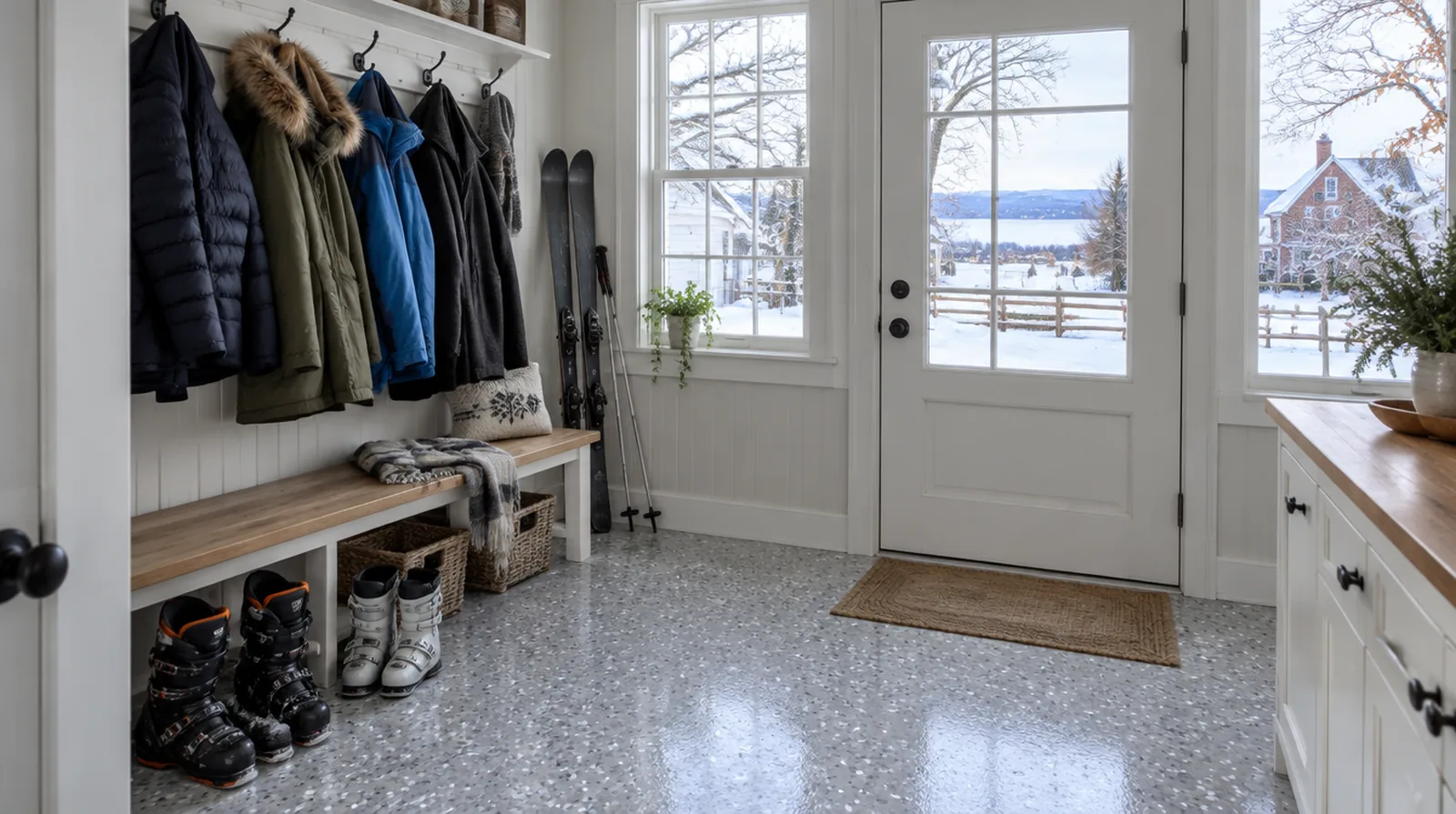
How a flake floor is built
We start with a pigmented base coat over ground, repaired concrete. While it is wet, we broadcast decorative vinyl chips across the surface until the base is covered. Once cured, the loose chips are scraped and vacuumed away, and we seal the floor with one or two clear topcoats. The result is thick, durable and textured, with a speckled appearance that looks a bit like granite.
Why flake works in a snowy climate
After a winter storm, a garage or mudroom floor collects dried salt crust, sand, mud and boot prints. On a solid-color floor, that shows immediately. A flake blend hides much of it, so the floor looks tidy between cleanings. The texture of the chips also adds traction when meltwater pools near the door or someone walks in with wet boots.
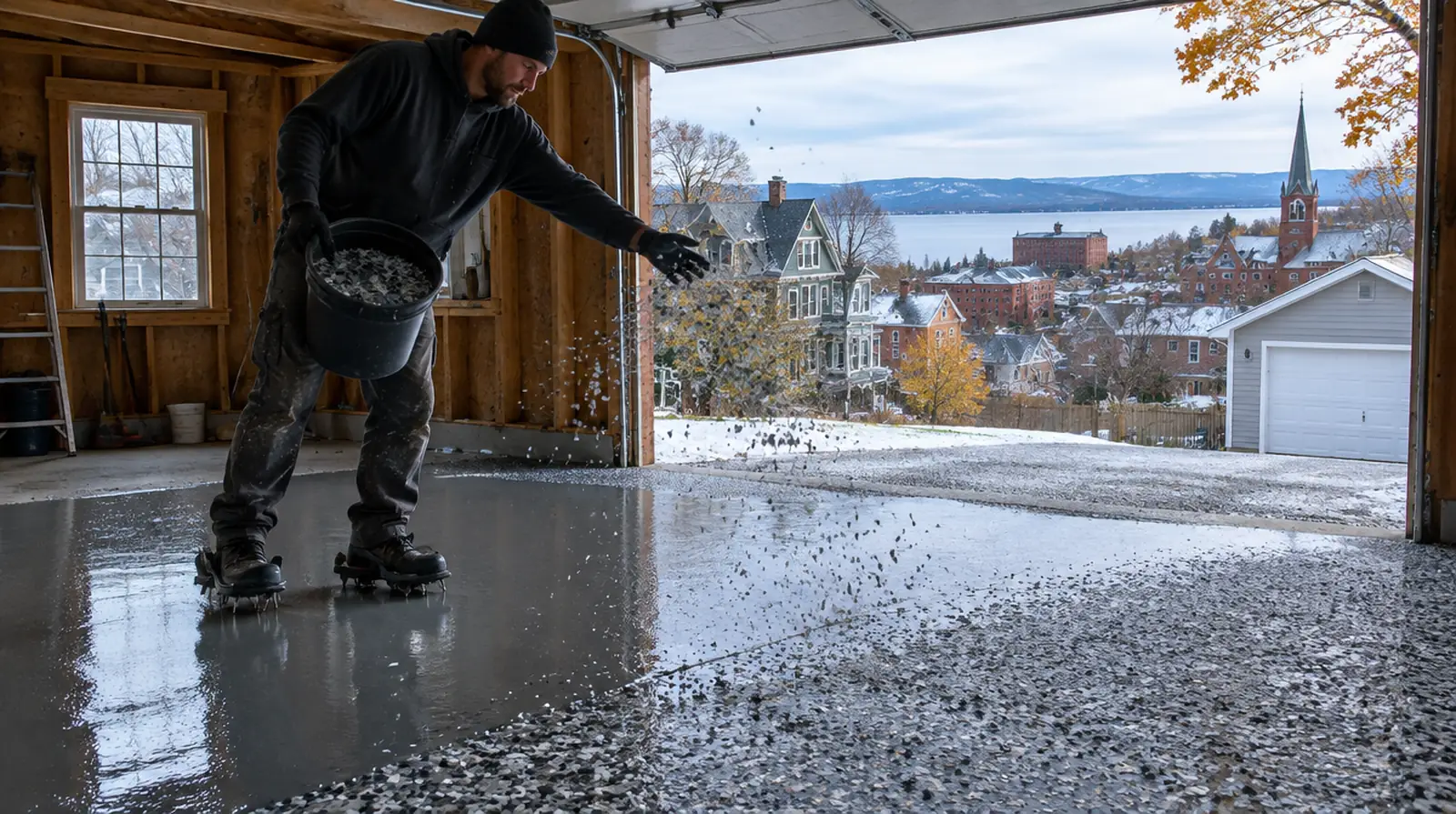
Full broadcast for durability
We usually recommend full coverage. The chips add thickness and impact resistance, and the clear topcoat bonds evenly over them. A partial broadcast lets more base color show and can work in lower-traffic rooms, but garages and entries benefit from the full system.
Popular blends
Light gray and white blends brighten dim garages and basements during short winter days. Mid-gray with black is the most forgiving for hiding salt and sand. Warm tan and brown blends complement older homes with wood trim. We bring sample chips so you can choose in your own space.
Where we install flake
- Attached and detached garages.
- Mudrooms and back entries.
- Basement laundry and utility rooms.
- Apartment building entries and storage rooms.
- Commercial restrooms, gyms and break rooms.
- Brewery and restaurant back-of-house areas.
Mudrooms and back entries
Many older homes have a back entry or converted porch that takes the brunt of winter traffic. Wood floors there can rot, and tile grout stains. If the room sits on a concrete slab, a flake system makes a tough, waterproof surface that can be mopped quickly and does not mind puddles from ski boots and dog paws.
Prep comes first
Flake hides dirt but not poor preparation. We grind every floor, fill cracks and test moisture. Basement slabs in older homes often need a moisture-mitigating primer to prevent blistering. We address those conditions before any decorative layers go down.
Topcoats
For garages, we typically use a polyaspartic clear coat, which resists salt, hot tires and UV, and cures well in cooler conditions. In commercial kitchens and breweries, a chemical-resistant urethane may be a better fit. Texture can be adjusted from smooth to grippy depending on the room.
Repairs over time
If a heavy object chips the floor, the speckled pattern hides small marks, and spot repairs blend in well. That forgiving nature is one reason flake is our most requested residential system.
Cleaning
Sweep sand regularly, rinse salt residue with clean water and mop with a neutral cleaner. A stiff deck brush helps in textured areas after mud season.
Choosing a blend
Light gray and white blends brighten dim garages and older basements with small windows. Darker blends with brown or tan chips hide sand, salt residue and mud between cleanings. Medium blends are a safe middle ground. We bring sample boards so you can see the chips under your own lighting rather than on a screen. Chip size matters too: larger chips create a bold pattern and hide more, while smaller chips look finer and more uniform. Whatever you choose, full broadcast to rejection gives the strongest build and the best texture for winter traction.
Pick a flake blend
Call (000) 000-0000 for a free estimate.