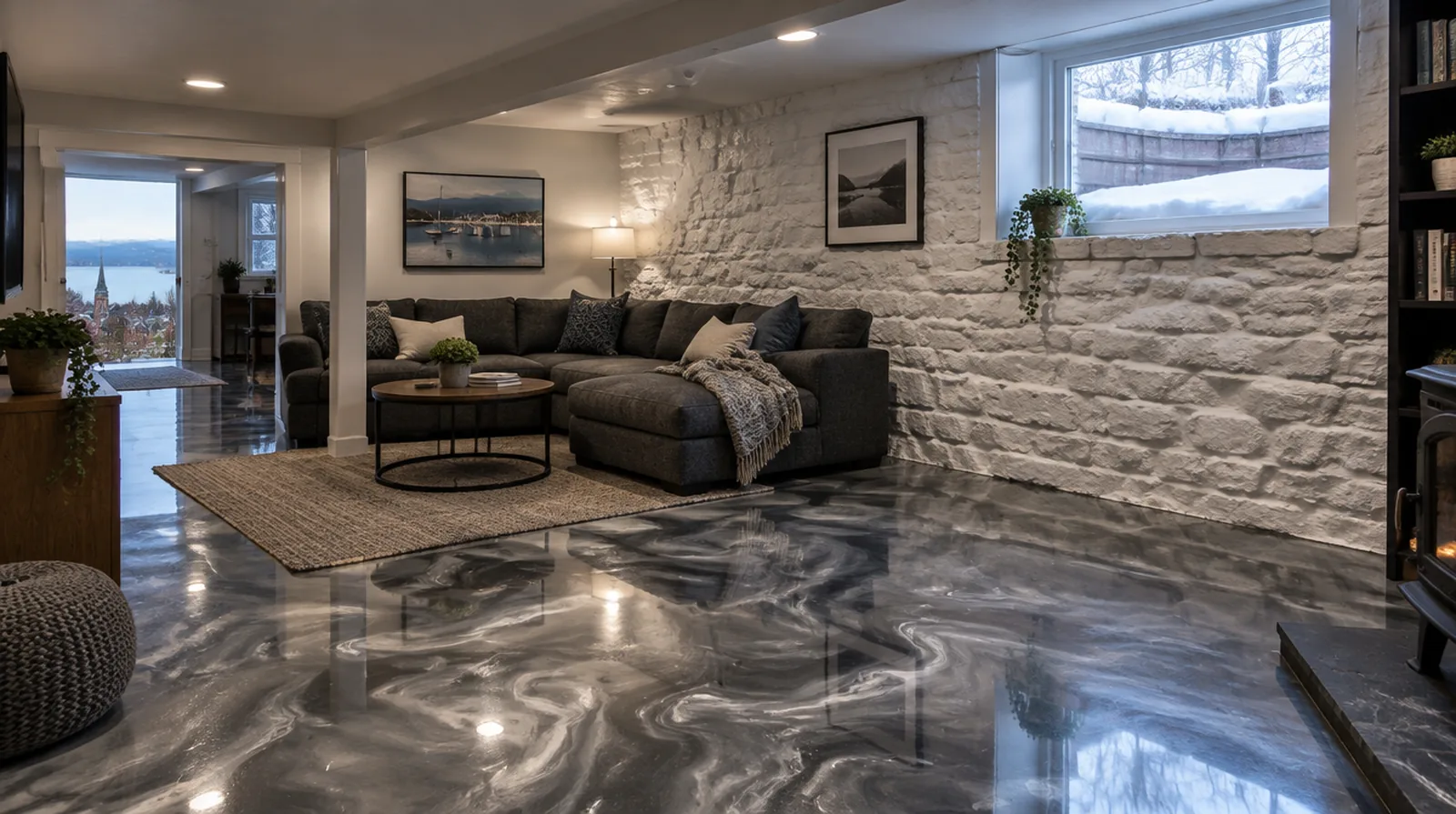
How metallic floors are created
A metallic floor starts with a solid base coat. Over it we pour clear epoxy mixed with fine metallic pigment and manipulate it by hand while it is still fluid. Rollers, trowels, brushes and solvent mists move the pigment into waves, cells and veins that catch light and appear to have depth. The floor is then sealed with a protective clear topcoat. Because the pattern forms as the resin levels and cures, every floor is unique.
Basements in older homes
Many houses here have basements with rough concrete floors over stone or brick foundations. Turning those spaces into family rooms, offices or guest areas is a popular project, and a metallic floor adds warmth and character without the risk of wood or carpet in a space that can see seasonal dampness. Before any decorative work, we test moisture and, if needed, apply a vapor-mitigating primer. We also grind and level the slab, since uneven older floors can show through glossy finishes.
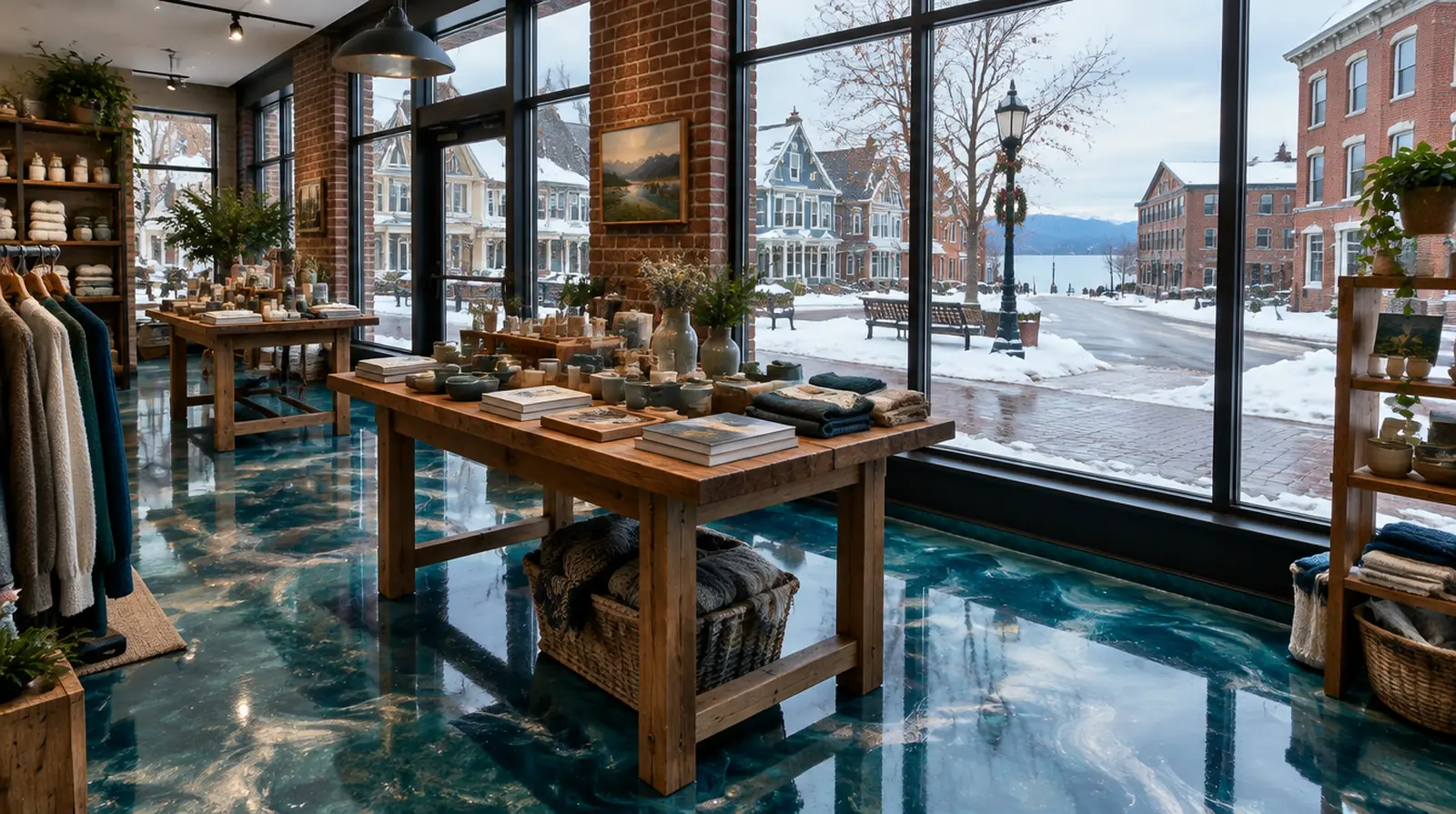
Shops, galleries and salons
Downtown storefronts and studios in converted industrial buildings often want a floor that stands out and complements brick and timber. Metallic floors are a strong choice for boutiques, galleries, salons, tasting rooms and offices. We can match brand colors and schedule work after hours so you do not lose business days.
Color choices
Silver and charcoal combinations feel modern and work with gray walls. Copper and bronze add warmth for basements and bars. Blues and teals bring a lakeside feel. Whites and pearls brighten rooms with little natural light, which is especially welcome in winter. We provide sample boards and photos of past floors to help you decide.
Preparation and flatness
Metallic floors reveal surface flaws more than other systems. We grind thoroughly, fill cracks and divots and use a skim coat when needed to create a flat, smooth base. We discuss joints before starting, since they can be filled or left to telegraph depending on the slab.
Protective topcoats
A clear urethane or polyaspartic topcoat adds scratch resistance and keeps the floor from yellowing. Satin finishes hide fine scratches better than high gloss and feel softer in living spaces. A slip-resistant additive can be included in entries, bars and kitchens.
Is metallic right for a garage?
It can be, but winter sand and salt are abrasive, and they show on a high-gloss metallic more than on flake. For garages, we often recommend metallic only in heated spaces or showroom-style garages with careful upkeep.
Timeline
Expect two to four days for grinding, repairs, base coat, metallic layer and topcoat. Each layer must cure before the next. In heated interiors, schedules are reliable year-round.
Care
Dust mop to remove grit, damp mop with a neutral cleaner, use felt pads under furniture and place mats at doors. In winter, keep boots and salt off the floor with a good entry mat.
Where metallic floors shine
Basement family rooms, home bars, man caves, showrooms, salons and studio spaces are ideal places for metallic epoxy. The surface reflects light from windows and fixtures, which helps brighten basements that get little daylight. Because every pour is handmade, no two floors look the same. We discuss color, movement and sheen beforehand and can create a small sample so you can approve the look. For traction, we can add a fine additive to the topcoat in areas where people walk with wet feet, such as near basement entries and bathrooms.
Design your metallic floor
Call (000) 000-0000 for a free estimate.